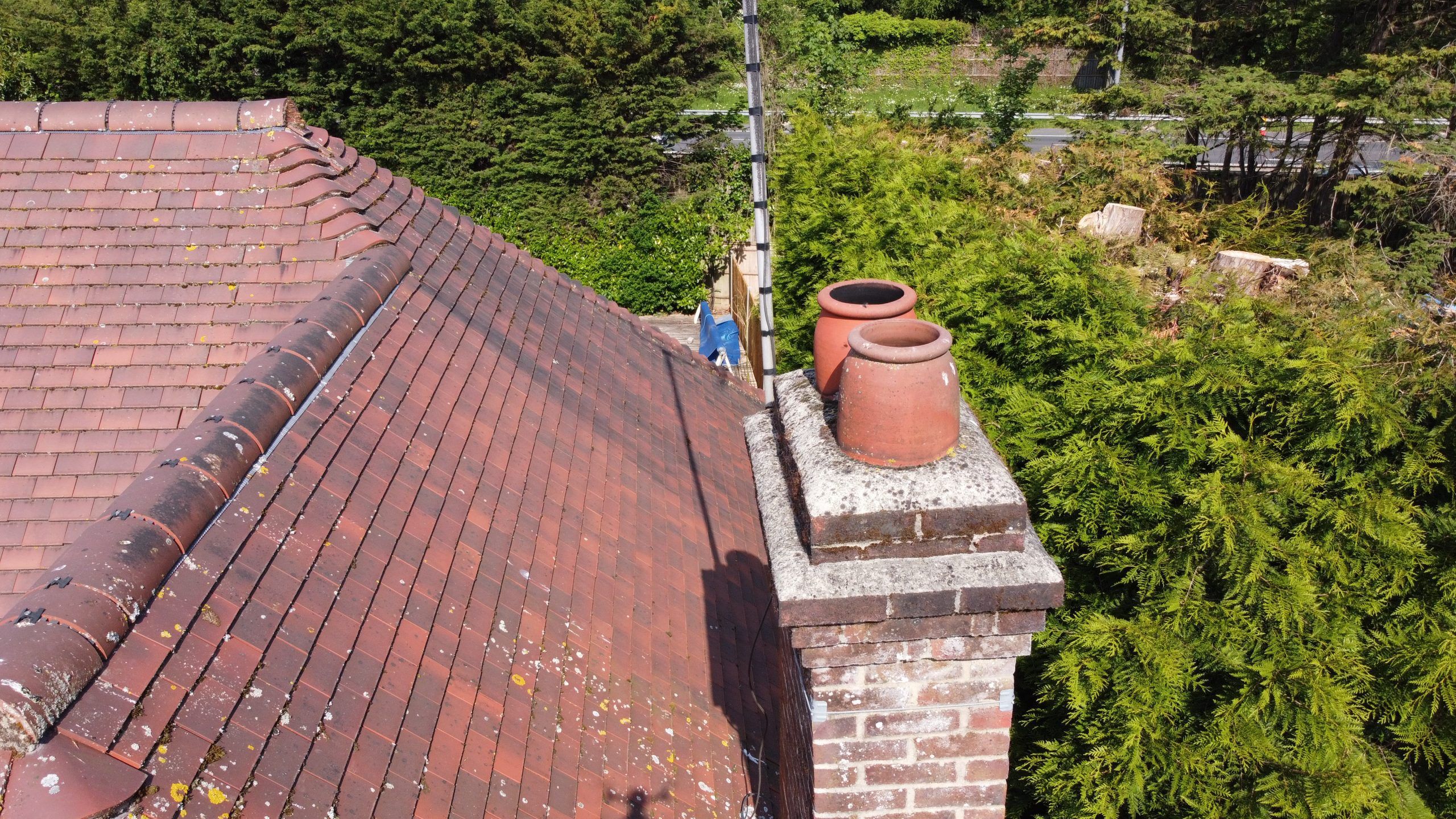
The roof is often the most expensive single element of a property to repair or replace. Yet many buyers give it barely a glance when viewing. Esher Surveyors makes roof inspection a priority on every survey across Surrey – because catching a failing roof early can save tens of thousands of pounds. This guide explains exactly what a surveyor looks for, what defects are commonly found, and what repairs might cost.
Why Roof Condition Matters When Buying a Surrey Property
Surrey's housing stock includes a large proportion of Victorian and Edwardian properties with pitched tiled roofs that are over a century old. Clay peg tiles, natural slates, and original lead flashings have a finite lifespan. Even properties from the 1930s–1960s may have roofs approaching the end of their serviceable life.
A failing roof is not just a cosmetic problem. Water ingress leads to:
- Structural timber decay in rafters, purlins, and ridge boards
- Wet rot and dry rot in ceiling joists and wall plates
- Damage to insulation and internal ceilings
- Damp penetration to walls and upper floors
- Potential collapse of isolated roof elements in extreme cases
How Does a Surveyor Inspect a Roof?
RICS guidance defines a clear methodology for roof inspections as part of Level 2 and Level 3 surveys:
External Inspection
The surveyor will carry out a thorough visual inspection from ground level using binoculars or a high-resolution zoom camera. Where it is safe and reasonable to do so, the surveyor will also inspect from the roof edge (e.g. from a flat roof, dormer, or accessible window). The following elements are assessed:
- Roof coverings: Condition of tiles, slates, or flat roof membrane – looking for cracking, slipping, missing, or deteriorated units
- Ridge and hip tiles: Checking for movement, cracking, or failed mortar bedding
- Valleys: Checking condition of lead, mortar, or proprietary valley gutters
- Chimney stacks: Condition of brickwork, pointing, flaunching, and flashings
- Flashings: Lead, zinc, or proprietary flashings at roof-wall junctions, abutments, and dormers
- Gutters and downpipes: Condition, fall, joint integrity, and evidence of overflowing
- Soffits and fascias: Condition of timber or uPVC boards, evidence of rot or damage
- Flat roofs: Condition of felt, GRP, or asphalt covering, evidence of ponding or blistering
Internal Loft Inspection
Where access is available, the surveyor will enter the roof space and inspect:
- Roof structure – rafters, purlins, ridge board, binders, and ceiling joists for deflection, splitting, or decay
- Evidence of water ingress – staining on timbers, wet insulation, water tracks
- Insulation levels and distribution
- Evidence of condensation or inadequate ventilation
- Woodworm or other insect infestation in roof timbers
- Any alterations to the roof structure (e.g. for loft conversions)
Common Roof Defects Found on Surrey Properties
Based on Esher Surveyors' extensive experience inspecting roofs across the county, these are the most frequently identified issues:
| Defect | Typical Cause | Urgency |
|---|---|---|
| Slipped or missing tiles/slates | Nail fatigue, storm damage, age | Medium – High |
| Failed ridge or hip mortar | Age, thermal movement, frost | Medium |
| Defective flashings | Age, poor installation, thermal movement | High |
| Blocked gutters | Debris accumulation, tree proximity | Medium |
| Cracked chimney flaunching | Frost, thermal movement, age | Medium |
| Flat roof blistering/cracking | UV degradation, ponding water | High |
| Roof timber decay | Water ingress, condensation, beetle | High |
| Insufficient insulation | Age, poor installation, non-compliant | Medium |
| Nail fatigue in slate roofs | Original iron nails rusting through | High – requires full re-slate |
Victorian and Edwardian Roofs: Special Considerations
Many Surrey properties have original or partially original roof structures dating from the Victorian or Edwardian eras. Key issues specific to these roofs include:
Nail Fatigue in Slated Roofs
Victorian slate roofs were often fixed with iron nails that corrode and eventually fail completely. When this "nail fatigue" is widespread, individual slates cannot be re-nailed and the entire roof covering must be stripped and relaid. This is a significant expense – but once done, a quality slated roof can last another 80–100 years.
Clay Peg Tile Roofs
Original clay peg tiles are still found on some older Surrey properties. These can be extremely long-lasting but become fragile with age. Finding matching replacement tiles can be difficult and expensive. A surveyor will assess the condition and percentage of the roof that has already been replaced.
Lead Valleys and Flashings
Original lead-lined valleys and flashings are generally excellent but can fail after 60–80 years as the lead fatigues and cracks. Replacement with new code-weight lead is the appropriate repair, carried out by a specialist plumber/roofer.
Esher Surveyors' Roof Assessment Approach
We use binoculars, zoom photography, and where possible physical access to provide the most thorough external roof assessment achievable without specialist access equipment. Where our inspection identifies potential issues that require closer inspection, we recommend a specialist roofing contractor's access inspection. We always report honestly on the limitations of our inspection.
Roof Repair and Replacement Costs in Surrey
| Repair Type | Typical Cost Range | Notes |
|---|---|---|
| Replacing individual tiles/slates | £150 – £500 | Per attendance, small number of units |
| Re-bedding ridge/hip tiles | £300 – £1,000 | Per section |
| Lead flashing replacement | £300 – £1,200 | Per junction/chimney |
| Gutter replacement (one side) | £300 – £700 | UPVC or cast iron |
| Flat roof replacement (garage) | £1,000 – £3,000 | GRP or felt system |
| Chimney repointing | £400 – £1,200 | Scaffold or MEWP required |
| Full re-slate (3-bed semi) | £8,000 – £18,000 | Including battens and felt |
| Full re-tile (3-bed semi) | £6,000 – £14,000 | Concrete or clay tiles |
Negotiating Using Your Roof Survey Report
If your RICS survey identifies significant roof defects, you can:
- Request a specialist roofer's quotation for the identified repairs
- Use the quotation to negotiate a price reduction from the seller
- Request the seller carries out specific repairs before exchange
- Walk away if the costs are too high relative to the purchase price
Esher Surveyors will advise you on the appropriate course of action based on the severity and likely cost of any roof defects identified during your survey.
"The survey flagged failed flashings and widespread nail fatigue in the slate roof. We got a roofer's quote for £14,000 and negotiated the same amount off the price. The survey paid for itself many times over."
Frequently Asked Questions
A surveyor inspects roof coverings, ridges, hips, valleys, flashings, chimney stacks, gutters, soffits, fascias, and the roof structure from the loft space. They look for missing or defective tiles, failed flashings, blocked gutters, rot in roof timbers, and signs of water ingress both externally and internally.
Minor repairs cost £150–£500; flashing repairs £300–£1,200; a full re-tile or re-slate on a semi-detached house ranges from £6,000 to £18,000. The right survey identifies exactly which repairs are needed before you buy, allowing you to budget accurately or negotiate on price.
RICS guidance requires surveyors to inspect roof coverings from ground level with binoculars or zoom camera, and from the roof edge where safe. They will inspect the roof structure from inside the loft space. Where a more detailed inspection is needed, Esher Surveyors will recommend a specialist roofing contractor.
Nail fatigue occurs when the original iron nails fixing slate to the roof battens corrode and fail. As the nails rust through, slates begin to slip. When nail fatigue is widespread, individual slates cannot be re-nailed and the entire roof must be stripped and relaid on new battens. A thorough survey will identify this issue.
A Level 3 Building Survey by Esher Surveyors includes a thorough roof inspection as part of the comprehensive assessment. Where our inspection identifies issues that require closer access (e.g. scaffolded inspection), we will recommend a specialist roofer as a follow-up. In most cases, the building survey assessment is sufficient to identify the nature and extent of any roof issues.
Lifespan depends on materials and maintenance: clay tiles can last 100+ years with maintenance; natural slate 60–100 years; concrete tiles 30–50 years; felt flat roofs 15–25 years; GRP flat roofs 20–30 years. Your surveyor will assess the current condition and estimate remaining useful life, helping you plan for future maintenance costs.
Concerned About a Property's Roof?
Esher Surveyors carries out thorough roof inspections as part of all Level 2 and Level 3 surveys across Surrey. Get the facts before you buy.
Book a Survey Level 3 Building Survey